Your Brain Believes What You Tell It — The Science Behind "I Am Enough"
What if the most powerful mental health tool wasn't a prescription, a therapy technique, or a wellness retreat — but three words you repeat to yourself twice a day?
That's exactly what happened to Blake Mycoskie, the founder of TOMS Shoes. A man with millions of dollars, global recognition, and a brand built on giving back — and yet, he fell into a deep, consuming depression. His psychiatrist gave him one simple exercise: twice a day, close your eyes and repeat out loud, "I am enough. I've always been enough."
He thought it was ridiculous. For weeks, it felt like nothing. But on day 28, something shifted. Standing in his kitchen, he said those words — and his whole body felt different.
This wasn't magic. This was neuroscience.
What Is Neuroplasticity — And Why Does It Matter for Mental Health?
Neuroplasticity is the brain's ability to reorganize itself by forming new neural connections throughout your life. For decades, scientists believed the brain was fixed after childhood. We now know that's wrong.
Your brain is constantly rewiring based on what you repeatedly think, feel, and do. Every thought you have activates a neural pathway. The more you repeat a thought, the stronger and more automatic that pathway becomes. This is often described as "neurons that fire together, wire together."
This means the negative stories you tell yourself — I'm not good enough, I'm a failure, I'll never get better — aren't just passing thoughts. Over time, they become the default architecture of your brain. Your mind starts treating them as fact.
The good news? The same mechanism works in reverse.
How Affirmations Rewire the Brain
Positive affirmations, when practiced consistently, work by activating the brain's reward system and gradually replacing deeply ingrained negative thought patterns. Research published in neuroscience and social psychology journals shows that self-affirmation activates the ventromedial prefrontal cortex — the region associated with self-related processing and positive valuation.
In plain terms: when you affirm something about yourself, your brain lights up in the areas connected to identity and reward. Do it repeatedly, and you start to build a new neural story.
This is why Blake's psychiatrist said twice a day. Not once a week. Not when you feel like it. Repetition is the mechanism. The brain doesn't change from a single exposure — it changes from consistent, repeated input over time.
It took 28 days. But it worked.
Why "I Am Enough" Is More Than a Feel-Good Phrase
For people living with depression, anxiety, or chronic stress — especially caretakers and family members who pour everything into others — the belief that you are fundamentally not enough is often at the core of the suffering.
That belief didn't come from nowhere. It was built over years of messages, experiences, and repeated thoughts. And it can be rebuilt.
"I am enough. I've always been enough." isn't a toxic positivity script. It's a direct counterstatement to the most common lie depression tells. Said consistently, with intention, it begins to compete with the negative pathway — and over time, it wins.
Start Today: Your 28-Day Practice
You don't need a therapist, an app, or a special routine. You need consistency.
- Twice a day — morning and night work best
- Say it out loud — vocalization reinforces neural encoding
- Close your eyes — reducing visual input strengthens internal focus
- Don't wait to believe it — the belief comes after the repetition, not before
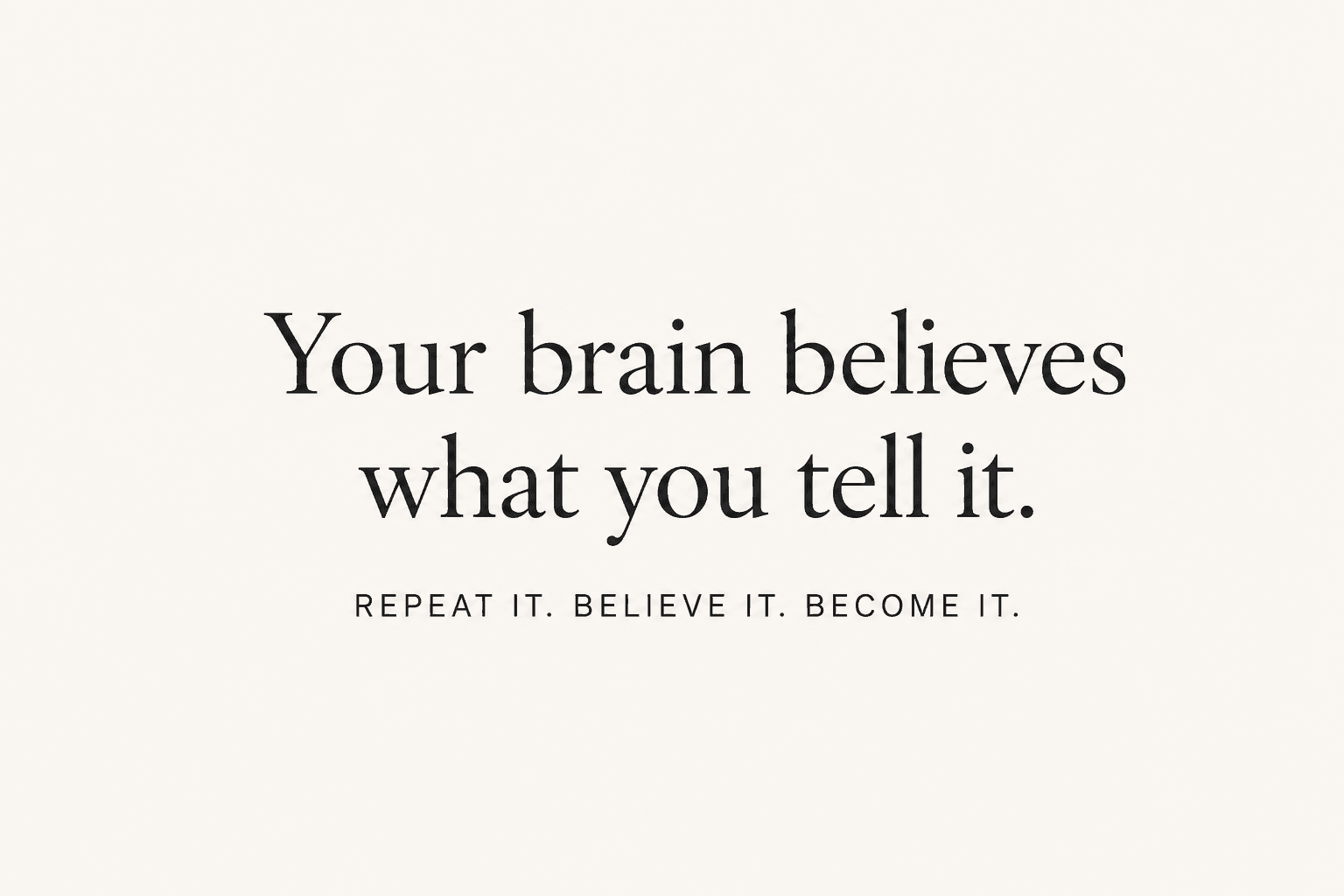
The thoughts you repeat become the story your brain believes. So choose the story carefully.
Related reading
Signs Someone May Be Struggling With Suicidal Thoughts (And How to Support Them)
Learn the signs of suicidal thoughts and how to support someone. A simple guide to recognizing warning signs and showing up with care.
How to Know When It’s Time to Change Therapists
Feel like it's time to change therapists, but not sure? Learn to read the signs itt's time to break up with your therapist, and find tips and next steps to protect your progress.
What is TMS Therapy for Depression?
Transcranial Magnetic Stimulation (TMS) offers a non-invasive, innovative treatment option for depression and other mental health issues when traditional therapies haven’t been effective.